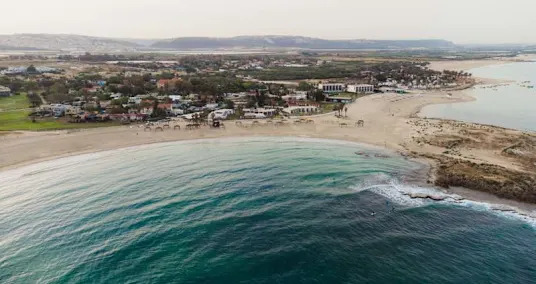
The discovery was made in an ancient shipwreck in the Dor Lagoon near the Carmel Coast, where archaeologists recovered nine pieces of unprocessed iron known as “blooms.”
Researchers from the University of Haifa said Wednesday that an underwater excavation off Israel’s northern Mediterranean coast uncovered what they described as the earliest known cargo of raw iron transported by ship, dating back around 2,600 years, Xinhua reported.
The discovery was made in an ancient shipwreck in the Dor Lagoon near the Carmel Coast, where archaeologists recovered nine pieces of unprocessed iron known as “blooms.” According to the university, the find provides direct evidence of how iron was transported in its earliest commercial stages.
The material was preserved in its original form, having solidified directly in a smelting furnace without undergoing forging or further refinement. Researchers said this distinguishes the cargo from later iron artifacts that typically show signs of shaping or tool-making.
Unlike copper and bronze, which could be melted into liquid form in ancient production processes, iron was heated with charcoal to produce a solid, porous mass. That mass was generally hammered to remove impurities and create denser material suitable for tools and implements.
The recovered blooms showed no indication of that secondary processing stage, suggesting they were transported immediately after production.

Earliest iron shipment discovered in ancient Mediterranean wreck
To determine the age and condition of the cargo, researchers conducted microscopic and chemical analyses.
Radiocarbon dating was also carried out on charred wood embedded in one of the pieces, helping confirm the timeline of the shipment. The findings were published in the journal Heritage Science.
Researchers said the cargo indicates that iron was being moved in raw form from production sites to other locations for further processing, pointing to a level of specialization in ancient manufacturing and trade networks in the Mediterranean.
The University of Haifa said the discovery provides new insight into early iron production and distribution practices in the region.
LATEST POSTS
- 1
 How a Snake That Eats Cobras Redefined the Meaning of ‘King’
 - 2Foreign military officials can become Israel's ambassadors, senior IDF commander tells 'Post'
- 3Make your choice for the PS5 game that you love playing with companions!
- 4How to see the Ursids, the final meteor shower of 2025
- 5Figure out how to Detect the Best Rooftop Substitution Choices


- What you need to know about Trump accounts as Michael and Susan Dell donate $6 billion to the new early childhood investment program
- ‘Raising 10 red flags’: Is Israel’s army exhausted?
- Mosquitoes carrying malaria are evolving more quickly than insecticides can kill them – researchers pinpoint how
- Meet Beef the bulldog, who takes slow walks with his 78-year-old friend
- Historical mysteries solved by science in 2025
- Change Your Home into an Exercise center with These Famous Wellness Gadgets
- Jury says Johnson & Johnson owes $40 million to 2 cancer patients who used talcum powders
- Palestinians reel under winter rains as Israel blocks Gaza shelter supplies
- New study measures titanium in Apollo rock to uncover Moon’s early chemistry